

Notched Sliding Winch vs. Weld-On Winch vs. Double Bracket Winch vs. Profile Portable Winch: A Professional Comparison
Trailer
winches are the foundation of any cargo securement system. While all winches
serve the same basic function -- applying tension to webbing straps—they differ
significantly in how they mount to the trailer frame and how easily they can be
repositioned to accommodate different loads.
This
guide compares four common winch types used in flatbed, drop deck, and utility
trailer applications: Notched Sliding Winch, Weld-On Winch, Double
Bracket Winch, and Profile Portable Winch. Each design offers
distinct advantages depending on your cargo, trailer configuration, and
operational priorities.
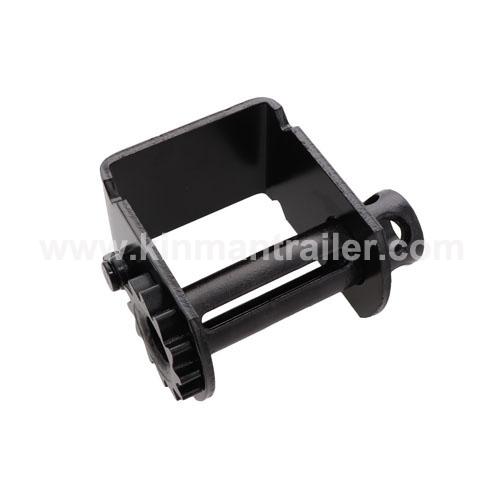
What Is a Notched Sliding Winch?
A
notched sliding winch is a movable winch designed to slide along a winch track
(typically C-channel) installed on the trailer side rail. The winch base
features notches or slots that correspond to intervals along the track,
allowing smooth repositioning while providing positive locking engagement
points.
Once
strap tension is applied, the notched mechanism locks the winch firmly in
place, preventing unwanted shifting even when tension is temporarily released.
This design combines the flexibility of a movable winch with the security of a
fixed anchor point.
Key characteristics:
Sliding
base with notched locking mechanism
Compatible
with C-channel track systems
Locks
under tension; releases when tension is removed
Best for: Mixed or variable cargo loads
requiring adjustable tie-down positions along the trailer length.
What Is a Weld-On Winch?
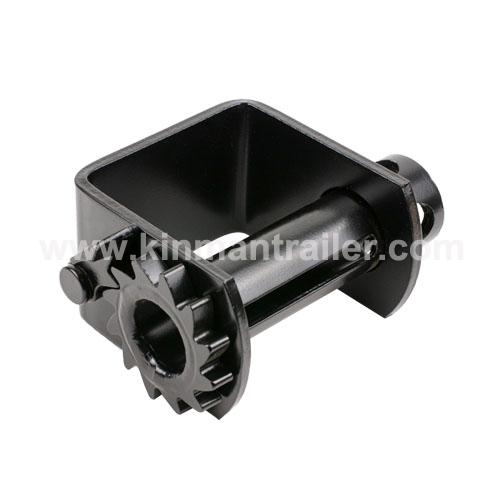
A
weld-on winch is permanently mounted directly to the trailer frame or side rail
by welding. It is the simplest and most robust winch design, consisting of a
main body, winch axle, ratchet, and gear with no sliding or removable
components.
Because
it is welded in place, a weld-on winch cannot be repositioned. However, this
permanence delivers maximum strength and stability, making it ideal for
repetitive hauling of identical loads where tie-down points never need to
change.
Key characteristics:
Permanent
weld attachment to trailer frame
Available
in undermount and side-mount configurations
Standard
or low-profile options
Best for: Dedicated trailers used for consistent
cargo types -- construction materials, logs, or standardized freight.
What Is a Double Bracket Winch?
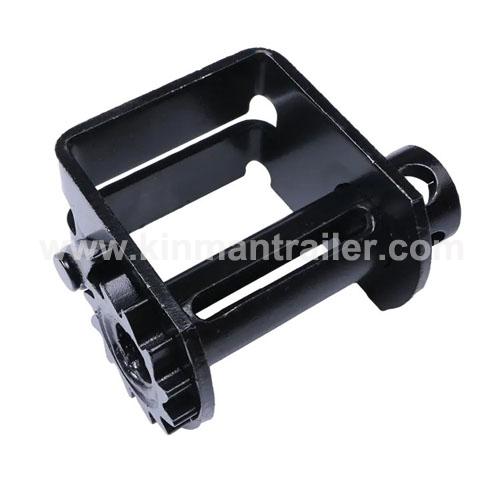
A
double bracket winch is a sliding winch featuring a dual-bracket or dual-slot
support structure designed to span two rail grooves or provide enhanced
dual-contact stability. It is commonly used with double-L track systems, where
the winch engages both the upper and lower lips of the track for superior load
distribution.
This
dual-contact design significantly reduces twisting and rocking under high strap
tension compared to single-point sliding systems. The result is more stable
tensioning and less wear on both the winch and the track.
Key characteristics:
Dual-bracket
or double-slot engagement
Designed
for double-L track systems
Enhanced
stability under high tension
Available
in standard, storable, and low-profile styles
Best for: Heavy or uneven loads where winch
stability under tension is critical, and where the trailer is equipped with
double-L track.
What Is a Profile Portable Winch?
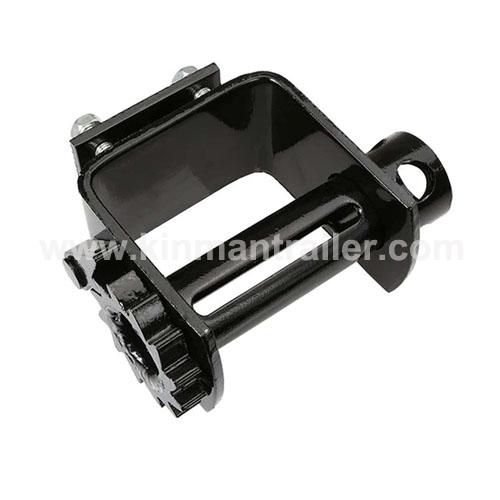
A
profile portable winch (also called a bolt-on winch) is a removable unit that
attaches to the trailer side channel using bolts or set screws. Unlike sliding
winches that require a continuous track system, portable winches can be mounted
at any point where bolt holes are available -- or moved between trailers
entirely.
Available
in standard or low-profile heights, these winches offer maximum flexibility for
operations that involve multiple trailers or changing tie-down requirements.
The trade-off is that each mounting position requires drilled bolt holes, and
relocation takes more time than sliding a winch along a track.
Key characteristics:
Bolt-on
or set screw mounting
Removable
and transferable between trailers
Best for: Equipment rental companies,
multi-trailer operations, and users who need one winch across multiple
vehicles.
|
|
Notched Sliding Winch | Weld-On Winch | Double Bracket Winch | Profile Portable Winch |
| Mounting method | Slides on C-channel | Welded permanently | Slides on double-L track | Bolted to side rail |
| Repositionable | Yes, along track | No | Yes, along track | Yes, but requires re-bolting |
| Track required | Yes (C-channel) | No | Yes (double-L track) | No |
| Stability under load | Good | Excellent | Excellent (dual-contact) | Good |
| Installation complexity | Moderate (track installation) | High (welding required) | Moderate (track installation) | Low (bolt-on) |
| Transferable between trailers | No (track-specific) | No | No (track-specific) | Yes |
| Best application | Variable cargo, adjustable positions | Fixed loads, maximum strength | Heavy loads, stability priority | Multi-trailer operations |
How to Choose the Right Winch for Your Application
Choose a Notched Sliding Winch if:
Your
cargo dimensions or tie-down points change frequently
You
want adjustability without sacrificing locking security
Your
trailer has C-channel track installed
Choose a Weld-On Winch if:
You
haul consistent loads with fixed tie-down positions
Maximum
strength and simplicity are priorities
Your
trailer is dedicated to one cargo type
Choose a Double Bracket Winch if:
You
need superior stability under heavy tension
Your
trailer is equipped with double-L track
You
want sliding adjustability with reduced twisting
Choose a Profile Portable Winch if:
You
operate multiple trailers and want one set of winches
You
need to add tie-down points without installing track
Portability
and cost flexibility matter more than speed
Compliance and Safety Notes
All
winches should be selected based on the Working Load Limit (WLL) and break
strength required for your cargo. Never exceed the rated capacity.
Always
inspect winches for damage, worn pawls, or bent frames before each use. Ensure
the winch is properly mounted and that all fasteners are tightened to
specification.
Frequently Asked Questions
What is the difference between a notched sliding winch and
a regular sliding winch?
A
notched sliding winch features a locking mechanism with notches or slots that
engage the track at defined intervals, preventing unintended movement even when
strap tension is released. Standard sliding winches may rely primarily on
tension to hold position.
Can a profile portable winch be used on any flatbed
trailer?
Profile
portable winches require a flat mounting surface with sufficient strength to
withstand the winch’s rated load. They can be bolted to side rails, but the
mounting structure must be capable of handling the applied forces.
Are weld-on winches stronger than sliding winches?
Weld-on
winches offer maximum mounting strength because they are permanently attached
to the trailer frame with no moving interface. However, sliding winches with
proper track systems and notched locking mechanisms also provide secure,
reliable performance for their rated loads.
What is a double bracket winch used for?
Double
bracket winches are designed for double-L track systems. The dual-bracket
engagement provides enhanced stability and reduces twisting or rocking under
high strap tension, making them suitable for heavy or uneven loads.
About Our Winch Solutions
Kinman supplies various winches including notched sliding winches, weld-on winches, double bracket winches, profile portable winches, etc. for flatbed, drop deck, and utility trailer applications.
For
product specifications, bulk pricing, or OEM/ODM inquiries, please contact our
team.
Written
by: Colin Ho, Product Office Boy
Date:
Sep 17, 2026