

Retractable Ratchet Straps vs. Manual Ratchet Straps: Key Differences for Professional Buyers
When selecting ratchet straps for transport, logistics, utility trailers, or industrial applications, buyers often compare retractable ratchet straps with standard manual ratchet straps. Both are designed to secure cargo, but they differ significantly in webbing management, operating speed, storage, load capacity, and overall cost.
This guide is based on our product testing, industry standards, and customer feedback. It is intended to help professional buyers, fleet managers, and distributors choose the right strap for their application.
What Are Retractable Ratchet Straps?
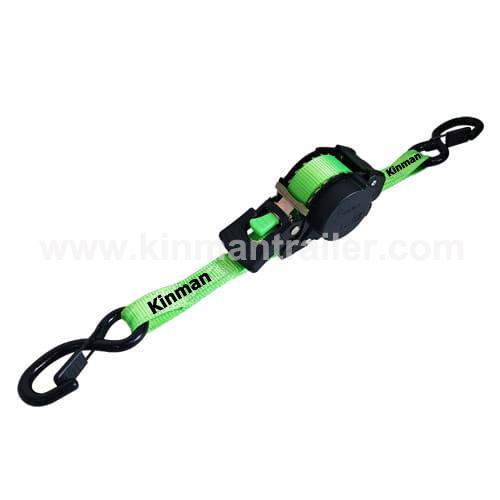
Retractable ratchet straps feature an internal spring-loaded spool that automatically winds and stores excess webbing inside the housing. This works similarly to a tape measure: when the strap is released, the webbing rewinds into the unit.
This design keeps the strap compact, reduces loose webbing, and helps prevent the tail from flapping during transport. Retractable ratchet straps are commonly used for utility trailers, ATVs, motorcycles, lawn equipment, and light commercial cargo control.
Typical characteristics:
-
Auto-rewind spring mechanism
-
Compact, self-contained housing
-
Common widths: 1 inch, 1.5 inch, 2 inch
-
Fast setup and release
-
Suitable for light to medium-duty applications
What Are Manual Ratchet Straps?
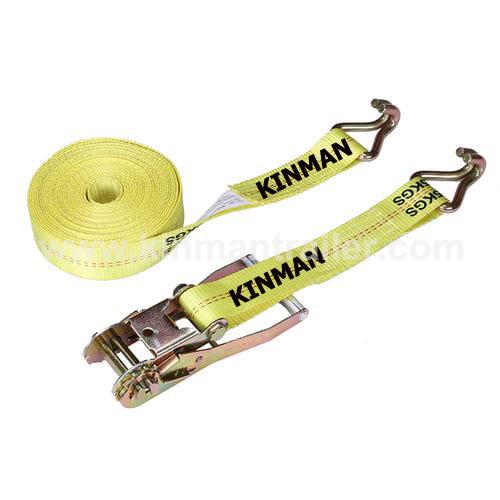
Manual ratchet straps are the traditional cargo control solution. They do not have an internal rewind mechanism. The user must manually thread the webbing through the ratchet mandrel, tighten the strap, and then coil or tie the excess webbing after use.
Manual ratchet straps are widely used in trucking, flatbed transport, logistics, and industrial freight because they are simple, durable, and available in high load capacities.
Typical characteristics:
-
No internal spring or spool
-
Simple steel ratchet frame
-
Common widths: 1 inch, 1.5 inch, 2 inch, 3 inch, 4 inch
-
Available in heavy-duty commercial grades
-
Lower cost and widely available in multi-packs
Key Differences Between Retractable and Manual Ratchet Straps
1. Webbing Management
Retractable ratchet straps use a built-in spring to pull unused webbing back into the spool. This prevents loose tails from flapping in the wind during transport and keeps the strap neat after use.
Manual ratchet straps leave a long tail of loose webbing. The user must manually wrap, tie, or secure the excess with rubber bands or strap keepers. If not managed properly, the loose tail can whip against the vehicle or cargo.
Important length note:
Manual ratchet straps are typically 2–3 times longer than the mainstream retractable ratchet straps currently available on the market. This longer webbing length provides greater reach and versatility for large loads, but it also means more excess material must be managed manually after use.
Best for:
-
Retractable: neat storage, daily use, light to medium cargo
-
Manual: long reach, heavy-duty cargo, industrial applications
2. Setup and Release Speed
Retractable ratchet straps are designed for fast operation. You pull out only the length you need, tighten the ratchet, and press the release button to let the strap rewind automatically.
Manual ratchet straps require you to thread the webbing through the center mandrel of the ratchet axle before tightening. This takes more time, especially when securing multiple loads per day.
Best for:
-
Retractable: frequent loading and unloading
-
Manual: occasional use or applications where cost and load rating are the priority
3. Storage and Portability
Retractable ratchet straps are self-contained and compact. Because the webbing rewinds into the housing, they resist tangling and fit neatly in a toolbox, storage bag, or vehicle cab.
Manual ratchet straps are more prone to tangling and “bird-nesting” when stored loosely. In truck beds, garages, or warehouses, they often require separate organization.
Best for:
-
Retractable: mobile users, service vehicles, organized storage
-
Manual: warehouses where straps are stored on racks or in dedicated bins
4. Durability and Load Capacity
Retractable ratchet straps are commonly available in 1-inch, 1.5-inch, and 2-inch widths. They are suitable for many everyday and medium-duty applications. However, because they contain an internal spring and housing, some professional users prefer manual straps for extreme shock loads or heavy commercial use.
Manual ratchet straps are available in heavy-duty commercial grades, including 2-inch and wider webbing, with higher working load limits. Their simpler steel frame design is often favored for trucking, logistics, and industrial freight.
Important note:
Load capacity depends on the specific product’s working load limit (WLL), break strength, and compliance with standards such as EN 12195-2, WSTDA, or DOT requirements. Always follow the manufacturer’s rated capacity and inspection guidelines.
Best for:
-
Retractable: light to medium-duty securing, personal and commercial vehicles
-
Manual: heavy-duty trucking, flatbed loads, and industrial freight
5. Price and Cost of Ownership
Retractable ratchet straps generally cost more because of their internal spring mechanism and housing. However, they can save time and reduce tangling-related wear in frequent-use applications.
Manual ratchet straps are usually less expensive and widely available in multi-packs. They are often the more economical choice for high-volume purchases or heavy-duty applications.
Best for:
-
Retractable: users who value convenience, speed, and neat storage
-
Manual: budget-focused buyers and heavy industrial users
Comparison Table
| Feature | Retractable Ratchet Straps | Manual Ratchet Straps |
|---|---|---|
| Webbing management | Auto-rewind spool | Manual coiling required |
| Typical webbing length | Mainstream market standard | 2–3 times longer than retractable |
| Setup speed | Fast | Moderate |
| Release speed | Push-button rewind | Manual release and stow |
| Storage | Compact, tangle-resistant | Prone to tangling |
| Common widths | 1", 1.5", 2" | 1", 1.5", 2", 3", 4" |
| Heavy-duty use | Light to medium duty | Medium to heavy duty |
| Price | Higher | Lower |
| Best use | Convenience, daily use | Heavy freight, industrial |
Which One Should You Choose?
Choose retractable ratchet straps if you want faster setup, cleaner storage, and less loose webbing. They are ideal for utility trailers, ATVs, motorcycles, and everyday cargo control.
Choose manual ratchet straps if you need maximum load capacity, longer reach, lower cost, and proven performance in heavy-duty trucking and industrial applications. Because manual straps are typically 2–3 times longer than mainstream retractable straps, they are often preferred when securing large or irregular loads that require more webbing length.
For professional buyers, the decision should be based on:
-
Working load limit (WLL)
-
Strap width
-
Required webbing length
-
Operating environment
-
Frequency of use
-
Compliance requirements
-
Storage and safety policies
Compliance and Safety Notes
Always check the working load limit (WLL) and break strength before use. Never exceed the rated capacity. Inspect straps for cuts, fraying, UV damage, or worn ratchet mechanisms before each use.
Applicable standards may include:
-
EN 12195-2
-
WSTDA
-
DOT requirements
-
Local cargo securement regulations
For professional and commercial applications, follow your company’s safety policy and keep inspection records where required.
Frequently Asked Questions
Are retractable ratchet straps as strong as manual ratchet straps?
Not always. Retractable straps are often designed for light to medium-duty applications. For heavy-duty loads, manual ratchet straps with higher WLL ratings are usually preferred.
What is the main difference between retractable and manual ratchet straps?
The main difference is webbing management. Retractable ratchet straps use a spring-loaded spool to automatically rewind excess webbing. Manual ratchet straps require the user to coil and secure the loose tail by hand.
Are manual ratchet straps longer than retractable ratchet straps?
Yes. Manual ratchet straps are typically 2–3 times longer than the mainstream retractable ratchet straps currently available on the market. This gives them greater reach for large loads, but also means more excess webbing to manage after use.
Can retractable ratchet straps be used for commercial trucking?
Some models can, but you must check the specific WLL, certification, and local regulations. Many commercial operators still prefer manual straps for maximum durability and longer reach.
Do retractable ratchet straps tangle less?
Yes. Because the webbing rewinds into the housing, they are much less likely to tangle than loose manual straps.
Are manual ratchet straps cheaper?
Generally, yes. Manual straps are simpler in construction and are often sold in multi-packs at lower unit prices.
About Our Ratchet Straps
Kinman supplies both retractable ratchet straps and manual ratchet straps for various applications.
For product specifications, bulk pricing, or OEM/ODM inquiries, please contact our team.
Written by: Colin Ho, Product Office Boy
Date: Sep 17, 2026